
How to Choose Paint Colours for Dark Hallways
Hallways are the workhorses of the British home. They usher in muddy boots, soak up school bags, and shepherd everyone from front door to kitchen without so much as a thank you. Yet they are often the darkest, pokiest spaces in the house. Many were never designed for comfort, squeezed into narrow footprints with a single window at the far end, or no window at all. The good news is that paint is the single most transformative tool you have, and in a dark corridor it can genuinely change how a space feels. The trick is not simply to reach for the whitest white on the shelf. It is about choosing tones that work with the light you have, not against it.
Start by Working Out What Kind of Dark You Have
Not all gloom is created equal. Before you lift a paint chart, spend a day watching how light moves through your hallway. A north-facing corridor receives cool, bluish light that can make colours look grey and shadowy. A south-facing hallway, even a narrow one, may pick up warm pools of sunlight at certain times. If your hall has no window at all, you are working with artificial light only, which changes the game entirely.
Take a few photos at different times, then assess the surface area. A long, thin hallway with high ceilings feels cavernous rather than oppressive, and can take a deeper tone. A low, wide space benefits from something lighter overhead. Knowing this stops you from fighting the architecture and starts you working with it.
Warm Neutrals Beat Cold Greys Every Time
The instinct in a dark hall is to go cool. Surely a crisp, icy grey will feel clean and airy? In practice, cool tones in low light turn muddy, shadowy, and faintly institutional. This is the classic hallway mistake and it is worth avoiding.
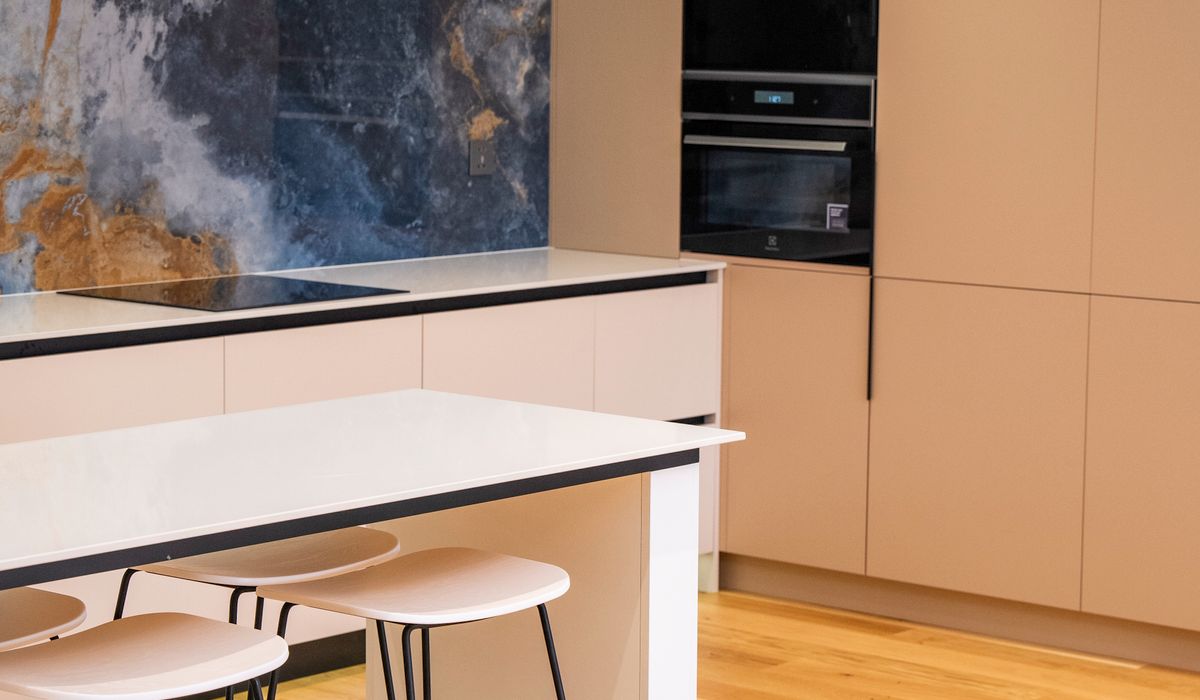
Instead, lean into warm neutrals with a gentle undertone. Think soft oatmeal, sandstone, pale greige with a yellow or red base, or a warm off-white with a hint of biscuit. These tones bounce the limited light around while keeping the space feeling inviting rather than clinical. Warm neutrals also flatter skin tones, which matters in a space where you check your reflection on the way out of the door.
- Warm off-whites: soft, creamy, and forgiving in low light
- Sandstone and pale taupe: adds quiet depth without closing the space in
- Pale clay and blush neutrals: surprisingly brightening, especially with warm bulbs
- Soft sage and chalky greens: excellent when you want character, as long as the green stays muted
Choose the Right White for Ceilings and Trim
Whites are not interchangeable. A pure brilliant white on a hallway ceiling can look harsh and cold, particularly under artificial light, while a warm white feels soft and calm and makes the walls look brighter by contrast. A simple rule: keep ceilings one shade lighter than the walls, and use the same colour family rather than an unrelated stark white.
For woodwork, don't automatically default to white. Painting skirting boards, doors, and architraves in a soft off-white or even a slightly deeper tone than the walls can give the hallway a considered, layered feel. It also hides the scuffs and fingerprints that hallways inevitably collect, which is a practical win in any busy household.
Finish Matters as Much as Colour
Here is where many people miss a trick. The sheen of your paint affects how much light reflects off the surface. In a dark hallway, a completely matt finish absorbs light and flattens the space. A low-sheen or eggshell finish, by contrast, catches the light and adds a soft glow.
For walls, a washable matt or a soft eggshell is a sensible middle ground: reflective enough to lift the space, durable enough for the traffic a hallway sees. For ceilings, a matt emulsion in a light warm tone keeps things calm overhead. For woodwork, eggshell or satin gives you wipeable surfaces and a subtle sheen that bounces light around door frames and skirting. Avoid high gloss on large wall areas, as it highlights every imperfection, but do not fear a little sheen on trim.
Use Paint to Play with Light and Proportion
Colour is not just about tone, it is about placement. In a narrow hallway, painting the end wall in a deeper, richer shade than the side walls draws the eye forward and makes the corridor feel shorter, not longer. It also creates a deliberate focal point.
Consider painting the ceiling and walls in the same colour, sometimes called colour drenching. In a dark, enclosed hallway this can feel surprisingly cocooning rather than claustrophobic, blurring the boundaries of the space and making it feel more generously proportioned. Add lighter trim for definition and the effect is elegant and contemporary.
If you have a staircase, use the paint to guide the eye upwards. A light, warm neutral on the walls will let the stairs read as a welcoming ascent rather than a looming shadow.
Match Your Lighting to Your Paint
Finally, and crucially, remember that paint does not create light on its own. It can only reflect what is already there. A warm white bulb (around 2700K) will flatter warm neutrals beautifully, while a cool daylight bulb will make even the loveliest sandy tone look grey and grim.
Layer your lighting where you can. A pendant overhead, a small table lamp on a console, and a mirror placed to catch and double what light you have will all amplify the effect of your chosen colour. Add a runner or rug in a light tone to lift the floor, too. When paint and lighting work in harmony, even the darkest British hallway can feel warm, bright, and genuinely welcoming.
tag: Interiors

Priya Nair Author
Renters can add storage without damaging walls. Use freestanding units, tension rods and adhesive hooks that remove cleanly at move-out.
YOU MAY ALSO LIKE
Simple DIY Shelving Solutions for Rental Flats
Jul 28
10Fresh herbs thrive in pots, window boxes and balconies. Learn which varieties suit British weather and how to harvest them regularly.
read more
Growing Herbs in Containers on a Small Patio
Jul 25
10Loft insulation can reduce heat loss and lower bills. Understand materials, ventilation and safety before starting this practical project.
read moreInteriors
-

ERRIC CATONA
Make laundry and cleaning easier with smart zoning, durable flooring and open shelving. Create a hardworking space that stays tidy daily.
May 19, 2016 at 5.12 pm
Reply
ERRIC CATONA
Measure your space carefully before buying. Consider corner sofas, footstools and removable covers for small rooms with high traffic.
May 19, 2016 at 5.12 pm
Reply -
ERRIC CATONA
Fill your home with seasonal blooms from a small patch. Learn easy annuals, planting times and picking techniques for long-lasting displays.
May 19, 2016 at 5.12 pm
Reply
Renovation
Your email address will not be published.